
Hip replacement
Total Hip Replacement: What to Expect
If you are considering a total hip replacement, this article provides a plain-language guide to the procedure, the components used, and the typical recovery journey, from the day of surgery to the weeks that follow.

If you are reading this, it is likely because hip pain is no longer a minor nuisance. It may be a constant presence, limiting your ability to walk, climb stairs, or even get a good night's sleep. When hip arthritis becomes this severe, a conversation often turns towards a total hip replacement. This is a significant decision, and it is normal to have many questions about what the operation truly involves. The aim of this article is to provide a clear, calm overview of what to expect, from the components of the new joint to the details of your recovery. It is a guide to help you prepare for a more detailed discussion with your surgeon.
What a Total Hip Replacement Actually Replaces
The hip is a simple but elegant ball-and-socket joint. The 'ball' is the top of your thigh bone (the femoral head), and the 'socket' is a cup-shaped part of your pelvis (the acetabulum). In a healthy hip, both surfaces are covered with smooth, slippery cartilage that allows for fluid, painless movement.
In an arthritic hip, this cartilage wears away. As it thins and roughens, the underlying bones begin to rub against each other. This bone-on-bone friction is the source of the deep ache, grinding, and stiffness you may be feeling. The goal of a total hip replacement is to remove these damaged, painful surfaces and replace them with new, artificial ones.
During the procedure, the surgeon removes the damaged femoral head. A metal stem is then placed into the hollow centre of the thigh bone to provide a solid foundation. A new ball, made of metal or ceramic, is attached to the top of this stem. On the other side of the joint, the damaged cartilage in the socket is removed, and a new metal cup is fitted into the pelvis. A durable liner is then placed inside this cup, creating a new, smooth surface for the ball to glide against.
The Components of a Modern Hip Implant
A modern hip replacement is an assembly of four main parts, each designed for a specific job. Understanding them can help demystify the procedure.

1. **The Stem:** This is inserted into your thigh bone (femur) and acts as the anchor for the new joint. 2. **The Head:** A polished ball that fits onto the top of the stem, replacing your original femoral head. 3. **The Cup:** A shell that is fitted into your natural socket (acetabulum). 4. **The Liner:** A smooth bearing surface that fits inside the cup, allowing the new ball to rotate freely.
These components are made from highly durable, biocompatible materials. Stems and cups are typically made from titanium or cobalt-chrome alloys. The ball can be made from the same metal alloy or from a very hard, smooth ceramic. The liner, which acts as the new cartilage, is most commonly a highly advanced and wear-resistant form of plastic called polyethylene. In some designs, a ceramic liner is paired with a ceramic head. The specific combination of materials used is a careful decision made by your surgeon, based on factors like your age, bone quality, and expected activity level. This is a key point of discussion during your consultation.
How the New Hip Is Secured: Cemented vs Uncemented
There are two primary ways to fix the new components to your bone. The choice between them depends on several factors, particularly the quality of your bone.
The most common method today is 'uncemented' or 'press-fit' fixation. In this technique, the implants have a specialised porous or rough surface. They are fitted very snugly into the bone, and this surface encourages your own bone to grow onto and into it over the first few weeks after surgery. This creates a durable, biological bond between your body and the implant.
The other method is 'cemented' fixation. Here, a special medical-grade grout called bone cement is used to fix the stem and/or the cup directly to the bone. This provides a very strong bond from the moment the surgery is finished. Cemented fixation is often an excellent choice in situations where bone quality may be less suitable for the bone in-growth required by uncemented components. Sometimes, a hybrid approach is used, with one component cemented and the other uncemented. Your surgeon will determine the most appropriate method for you.
On the Day of Your Total Hip Replacement Surgery
The day of your operation follows a structured path. You will be admitted to the hospital and will meet the members of your surgical team. A key person you will speak with is the anaesthetist, who will discuss the plan to keep you comfortable and safe during the procedure.
There are generally two types of anaesthesia used for hip replacement. One is a general anaesthetic, where you are completely asleep. The other is a spinal or epidural anaesthetic, where an injection in your back makes you numb from the waist down. You are not aware of the surgery with a spinal anaesthetic, as you are also given sedation to make you relaxed and sleepy. Many patients and anaesthetists prefer a spinal anaesthetic, but the final decision is a joint one made between you and your anaesthetist based on your health and preference.
After your anaesthetic is administered, the surgery is performed. Afterwards, you will be taken to a recovery area. Here, nurses will monitor you closely as you begin to wake up. Your comfort is a priority, and pain relief is given to manage any post-operative soreness.
Your First Steps and Early Recovery
Modern hip replacement recovery emphasizes early movement. In most cases, the hospital team, including physiotherapists, will help you to get out of bed and stand on your new hip on the same day as your surgery or the following morning. You will use a walking frame or crutches for support.
You will also be taught some simple exercises to do in bed to encourage circulation and begin activating the muscles around your new hip. While you will have some discomfort, your pain will be managed with medication to allow you to participate in this important early mobilisation.
To protect the new joint as the surrounding tissues heal, there will be some temporary movement precautions. These 'rules'—such as how you sit, bend, or sleep—depend entirely on the surgical approach your surgeon used to perform the operation. There is no single set of rules that applies to everyone. Your surgical and physiotherapy team will teach you the specific precautions that apply to you. It is vital to follow their guidance rather than generic advice you might find elsewhere.
The Weeks After Surgery: Regaining Your Independence
After leaving the hospital, your recovery continues at home. You will likely use crutches or a walker for several weeks. As your strength, balance, and confidence grow, you will gradually reduce your reliance on these aids, a process guided by your physiotherapist.
Physiotherapy is a cornerstone of a successful recovery. You will have a programme of exercises designed to restore your range of motion and, crucially, to strengthen the muscles that support your hip. Diligently following this programme is your contribution to the success of the operation.
You will also receive instructions on how to care for your surgical wound. It is important to keep it clean and dry until it is fully healed. You will typically have a follow-up appointment with your surgical team a few weeks after the operation to check the wound and your overall progress. Further reviews are scheduled at intervals to monitor the long-term function of your new hip.
Signs That May Require Urgent Medical Review
While complications are not common, it is important to be aware of certain signs and symptoms. The following are generally regarded as reasons for seeking urgent medical evaluation from your surgical team or a hospital emergency department, rather than waiting for a scheduled appointment:
• Sudden, severe pain in your hip, particularly if you cannot put any weight on your leg. • A sensation of the hip 'popping' or 'giving way', or if the leg appears shorter or is rotated into an abnormal position. • Signs of a possible wound infection, such as increasing redness, heat, swelling, or a discharge of fluid, especially if you also feel unwell or have a fever. • Pain, tenderness, or swelling in your calf muscle. • Sudden shortness of breath or chest pain.
Prompt assessment of these signs is an important part of promoting a safe recovery.
A Well-Established and Life-Changing Procedure
All surgery involves risks and requires a period of dedicated recovery. However, total hip replacement is widely considered one of the most successful and reliable procedures in all of orthopaedic surgery. For the right patient, it can be truly life-changing.
The primary goals are to dramatically relieve the chronic pain of arthritis and to restore function. The aim is to allow you to return to many of the activities you once enjoyed, whether that is simply walking without a limp, managing stairs with ease, or being able to play with your grandchildren. It is an operation designed to improve your quality of life.
This article provides a general outline, but it cannot replace a personal discussion. The decision to proceed with a total hip replacement, and the specifics of that journey, are unique to you. A detailed conversation about your individual circumstances, the potential benefits, and the associated risks is essential.
To schedule a consultation to discuss your hip pain with Dr. Farooq Azam Khan, a consultant orthopaedic and joint replacement surgeon in Lahore, please contact our clinic.
Further reading
 Hip replacement
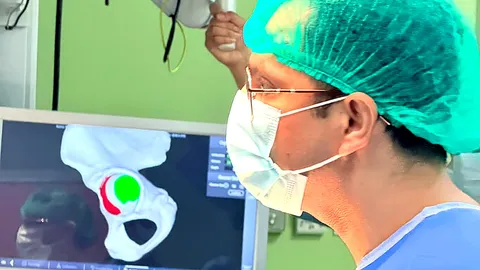
A Robot Came to Lahore: What the First Robotic Hip Replacement at Sharif Medical City Actually Means
On 28 July, SUNO News reported the first robotic-assisted hip replacement at Sharif Medical City Hospital, Lahore. Here is what the technology does, what the evidence says it is worth, and how the same scene is playing out from Nairobi to Glasgow. Hip replacement
What Drives the Cost of Hip Replacement in Pakistan
A breakdown of the factors that determine the total cost of a hip replacement in Pakistan, explaining why a single price doesn't exist and what to expect in a consultation. Recovery & rehabilitation
Life After Joint Replacement: What Patients Commonly Describe
An overview of the common experiences patients report after hip or knee replacement surgery, from initial pain relief and new sensations to returning to daily activities and long-term care for the implant. Regenerative medicine
What Is BMAC Injection? A Complete Guide to Joint Preservation in Pakistan
What is BMAC injection? Learn how bone marrow aspirate concentrate works for knee osteoarthritis in Pakistan, clinical trial outcomes, limitations, costs, and candidate selection.