
Regenerative medicine
BMAC for Sports Injuries: Where It Fits and Where It Does Not
An evidence-based guide to BMAC for sports injuries. Understand where bone marrow aspirate concentrate fits in athletic recovery, why it cannot repair complete ACL ruptures, and how partial ligament, meniscus, and cartilage injuries are managed.
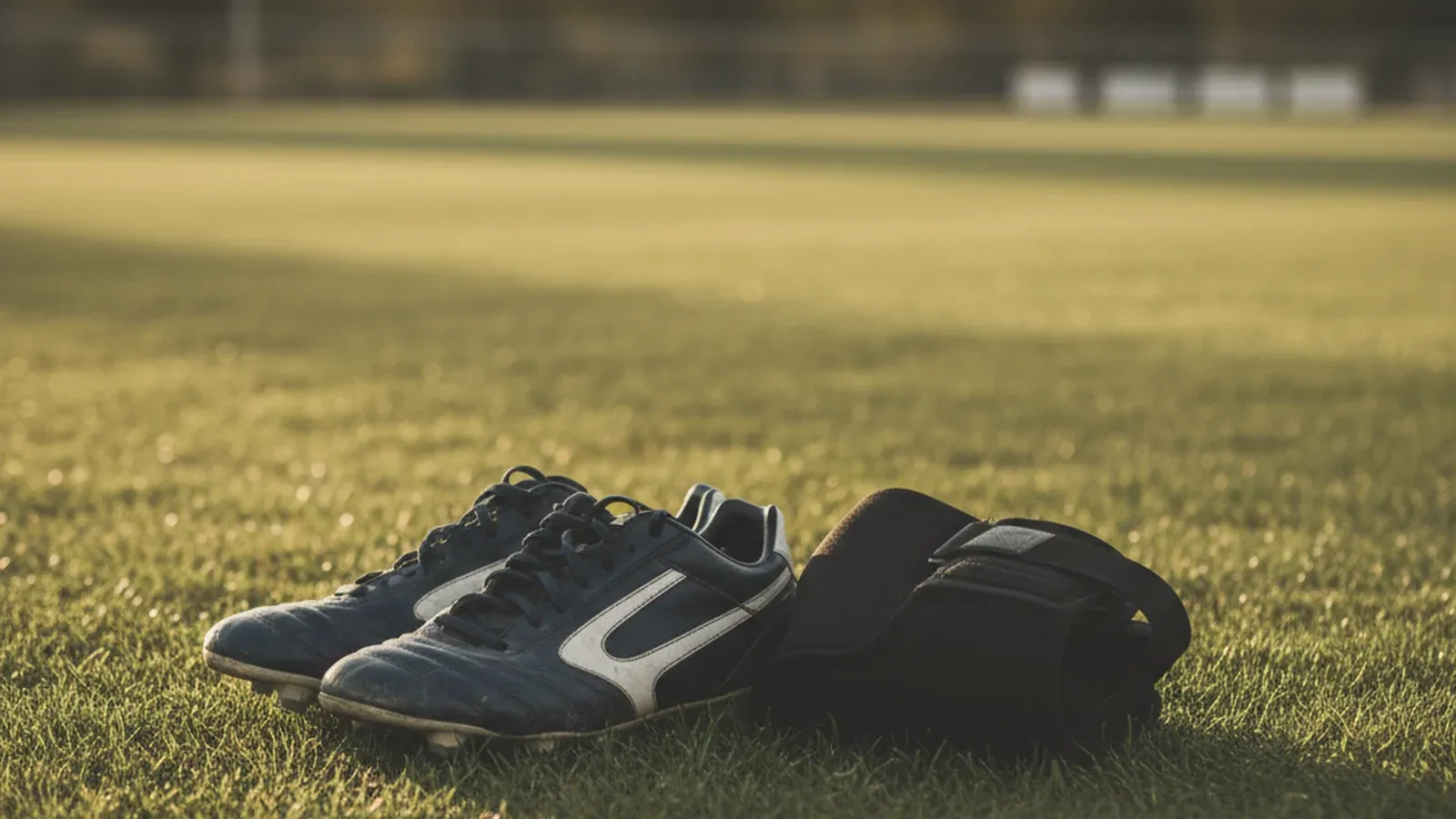
For athletes and active individuals recovering from acute joint trauma, the application of BMAC for sports injuries is an area of growing clinical interest. Bone marrow aspirate concentrate (BMAC) provides a concentrated source of autologous mesenchymal stem cells (MSCs), platelets, and anti-inflammatory growth factors harvested from the patient's own bone marrow. However, in sports medicine, establishing what biologics can and cannot achieve is essential to avoiding inappropriate treatment.
At his practice in Lahore, consultant orthopaedic and sports injury surgeon Dr Farooq Azam Khan integrates biological therapies through the BMAC treatment in Lahore programme alongside advanced arthroscopic reconstruction. This guide provides an honest examination of where BMAC fits within sports injury management, why it cannot replace mechanical surgical repair, and how acute injuries are properly assessed.
BMAC for Sports Injuries: Where Biologics Fit in Orthopaedics
In athletic medicine, biological therapies are investigated to support tissue healing, calm post-traumatic joint inflammation, and augment surgical repairs. Conditions where biological adjuncts are plausibly discussed include:
- Focal articular cartilage defects: Localised chondral injuries resulting from trauma where the surrounding joint alignment remains preserved, often used as an adjunct during marrow-stimulation or restorative cartilage procedures.
- Partial ligament and tendon sprains: Grade I or II partial ligament injuries without gross mechanical instability, where cellular signalling may support biological recovery alongside structured rehabilitation.
- Early post-traumatic joint irritation: Persistent synovial inflammation and joint effusion following athletic impact that does not respond to simple rest and physical therapy.
- Surgical augmentation: Biological placement during arthroscopic repairs to enrich the local cellular environment.
Why BMAC Cannot Repair a Complete ACL Rupture
One of the most critical misconceptions in sports medicine marketing is the idea that stem cell or BMAC injections can heal a completely torn anterior cruciate ligament (ACL). It must be stated plainly: BMAC does not repair a complete ACL rupture, and an injection is never a substitute for surgical ACL reconstruction.
The anterior cruciate ligament resides inside the knee joint synovial fluid. When it tears completely, the elastic ligament fibres retract, lose blood supply, and separate. No biological injection can bridge a physical gap, re-tension ruptured collagen bundles, or restore rotational stability to an unstable knee. Attempting to treat a completely ruptured ACL with injections alone leaves the knee mechanically unstable, increasing the risk of secondary meniscus tears and accelerated joint wear.
For patients evaluating ligament damage, reading our guide on torn ACL: when surgery is not needed helps clarify the distinct criteria separating low-demand partial tears from unstable complete ruptures requiring operative reconstruction.
Meniscus Tears: Mechanical vs Biological Considerations
Similarly, meniscus injuries require careful structural differentiation. The meniscus is a fibrocartilaginous shock absorber with limited vascularity, as detailed in our guide to meniscus tear symptoms and grades:
- Unstable mechanical tears: Displaced bucket-handle tears, complex radial tears, or flap tears that physically catch or lock the joint cannot be resolved by an injection. These require arthroscopic repair or selective debridement.
- Stable, degenerative meniscus wear: In older active patients where meniscus fraying accompanies early joint wear, BMAC may help manage surrounding synovial inflammation and joint discomfort as part of broader joint preservation.
Understanding the Evidence Base: Osteoarthritis Data vs Sports Medicine
A crucial distinction that every active patient must recognise is that the published outcome evidence cited elsewhere in this cluster—such as the 4-year joint preservation data from Pabinger et al. (Scientific Reports, 2024)—is knee osteoarthritis data, not sports injury or athletic performance data.
In chronic osteoarthritis, BMAC targets diffuse joint wear and widespread low-grade inflammation. In sports injuries, pathology is often acute, focal, and mechanical. While general biological mechanisms are reviewed in our complete guide to BMAC in Pakistan, athletes should be aware that high-level prospective sports-specific trials remain limited. Orthopaedic surgeons discuss BMAC as a supportive biological option rather than a miraculous shortcut.
Recovery and Return to Activity
Following any biological injection or sports injury procedure, rehabilitation must be progressive and tailored to tissue healing rather than governed by rigid schedules. General recovery phases include:
- Initial tissue protection: Avoiding high-impact drills, heavy loading, and pivoting activities while the pelvic harvest site and joint settle.
- Graduated rehabilitation: Engaging in supervised physiotherapy to rebuild muscular symmetry, restore full joint range of motion, and enhance neuromuscular control.
- Return to sport: The decision to resume competitive sports or heavy athletic loading is made in close consultation with your orthopaedic surgeon, based on objective functional testing, stability assessments, and tissue readiness.
Signs Generally Regarded as Needing Urgent Medical Evaluation
Acute sports injuries can occasionally involve severe joint damage requiring immediate clinical attention. Symptoms generally regarded as reasons for urgent medical evaluation include:
- A sudden 'pop' accompanied by rapid, tense joint swelling within 1 to 2 hours of injury (frequently indicative of an acute ligament rupture or hemarthrosis).
- Complete inability to bear weight on the injured leg immediately after the incident.
- A true mechanically locked joint that cannot be extended.
- Joint pain accompanied by fever, chills, or spreading skin warmth and redness.
Clinical Consultation and Next Steps
Determining the correct treatment pathway for a sports injury requires accurate clinical stability testing, weight-bearing X-rays, and high-resolution magnetic resonance imaging (MRI).
A comprehensive consultation with Professor Dr Farooq Azam Khan at his Lahore clinics provides an expert orthopaedic evaluation, ensuring that mechanical instabilities receive appropriate surgical care while biological therapies are applied only where clinically indicated.
Common questions
- Can BMAC heal a completely torn ACL without surgery?
- No. BMAC cannot reconnect or repair a completely ruptured ACL. A complete tear is a structural and mechanical injury that requires surgical reconstruction to restore joint stability.
- Where does BMAC fit in sports injury treatment?
- BMAC is used primarily as a biological adjunct to support tissue healing in focal cartilage defects, partial ligament injuries without instability, and during select arthroscopic surgical repairs.
- Can BMAC be used for meniscus tears?
- BMAC cannot repair mechanically displaced or locked meniscus tears, which require arthroscopic surgery. It may be considered in stable degenerative meniscus fraying to manage surrounding inflammation.
- Are the clinical outcome statistics for knee arthritis applicable to sports injuries?
- No. The 4-year clinical evidence and outcome scores published in the literature reflect chronic knee osteoarthritis in older adults, not acute sports injuries in athletic populations.
References
Further reading
 Regenerative medicine
BMAC and Avascular Necrosis Treatment for the Hip
An evidence-based guide to avascular necrosis treatment of the hip. Learn about AVN causes, radiographic staging, joint preservation with core decompression and BMAC adjuncts, evidence limitations, and total hip replacement. Hip replacement
Total Hip Replacement: What to Expect
If you are considering a total hip replacement, this article provides a plain-language guide to the procedure, the components used, and the typical recovery journey, from the day of surgery to the weeks that follow. Hip replacement
A Robot Came to Lahore: What the First Robotic Hip Replacement at Sharif Medical City Actually Means
On 28 July, SUNO News reported the first robotic-assisted hip replacement at Sharif Medical City Hospital, Lahore. Here is what the technology does, what the evidence says it is worth, and how the same scene is playing out from Nairobi to Glasgow. Knee replacement
What Drives the Cost of Knee Replacement in Pakistan
No two knee replacement quotes in Pakistan look the same, and that is not a mystery. Here is what actually drives the cost, from implant to hospital stay, before you sit down for a consultation.